
If you are missing a tooth and looking into implants, the first thing most people want to know is whether it will actually hold.
It holds because your own jawbone grows onto it. A dental implant is a small titanium post placed into your jaw where the tooth root used to be. Over the next few months, bone cells attach directly to the surface of that post and lock it in. Dentists call that osseointegration. In plain words, the bone and the implant grow together until they work as one piece.
That is why an implant feels like a real tooth instead of something sitting on top of your gums.
What a Dental Implant Actually Is
An implant has three parts.
The post is the part that goes into your jawbone. It is small, titanium, and shaped a little like a screw. Titanium is used because the body accepts it well and bone attaches to it readily.
The connector, called an abutment, sits on top of the post once the bone around it has healed.
The crown is the tooth you see. It is made to match the color and shape of the teeth next to it.
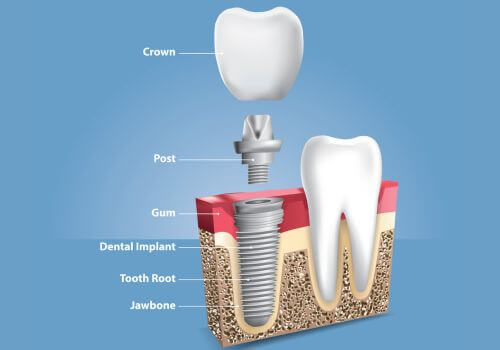
Once all three are in, you brush it, floss it, and eat with it like any other tooth.
How the Bone and the Implant Grow Together
Right after the post is placed, your body treats the area the way it treats healing bone. Bone cells move to the surface of the implant and begin laying new bone directly against it.
Over the next three to six months, that new bone fills in around the post and grips it. There is no glue and no cement holding the implant to your jaw. The bone itself is the anchor.
How long this takes is different for everyone. Bone quality, where the tooth was, and your general health all affect the pace. If the bone needed building up first, it takes longer, and that is normal.
Why Implants Hold So Well
Because the implant is anchored in bone, it handles biting and chewing the way a natural root does. You can eat what you want without anything shifting.
An implant also stands on its own. It does not lean on the teeth beside it the way a bridge does, so those teeth are left alone.
There is one more thing implants do that most people do not hear about. When you lose a tooth, the bone underneath stops getting used. Chewing is what tells that bone to stay dense, and without a root there it slowly shrinks. An implant puts that pressure back into the bone and helps keep it.
The American Dental Association covers this in its patient guide to implants if you want to read further.
Your Implant Is Placed Here in Waipahu
Most general dental offices send implant work out to a specialist across town. We do not.
Most of our dentists place dental implants, so in a lot of cases the dentist you already see for your checkups is the one who does it. We also have a dedicated oral surgeon on staff for the more involved surgical cases, including bone grafts and sinus lifts when the jaw needs building up first.
Either way, it happens here. One office, one set of records, and the same people you already know from your cleanings. You are not handed off to a stranger and you are not explaining your history twice.
We have been the family dentist in Waipahu and West Oahu for 25 years, and this is the kind of thing we built the practice to handle in house.
What to Expect, Step by Step
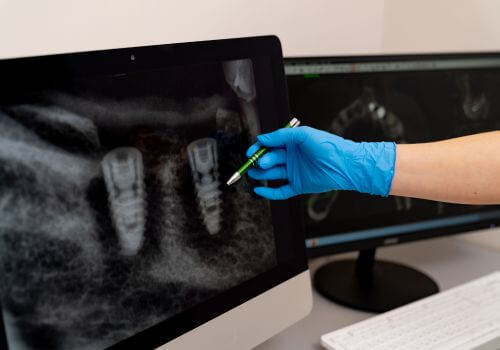
We start with a consultation and a 3D X-ray so we can see your bone, your bite, and the teeth around the gap. You will know up front whether an implant is right for you and roughly how long your case should take.
Then we give you the plan and the price, in full, before anything begins.
Placement happens here in our Waipahu office, with local numbing. Most patients tell us it was quicker and easier than they expected.
While the bone heals, you wear a temporary tooth so your smile stays full.
Once the implant is solid, we attach the custom crown. After that you care for it like any other tooth, and we keep an eye on it at your regular cleanings.
What It Costs and How People Pay for It
Implants are a real investment, and we will give you the actual number before anything starts.
If you do not have dental insurance, ask us about our Smile Plan. It is our in-house membership for uninsured patients. It covers your cleanings, checkups, and X-rays for the year, and members save 5 percent on implant treatment, including the crown.
We also offer financing through CareCredit, Alphaeon, and Cherry if you would rather pay monthly, and we accept HSA and FSA.
We do accept most PPO dental insurance. Coverage for implants varies a lot from plan to plan, so we will check yours and tell you what it actually pays before you decide anything.
Frequently Asked Questions
Does getting an implant hurt?
The area is numbed thoroughly before anything begins, and we check in with you the whole way through. Most patients tell us the soreness afterward was less than they expected and settled down within a few days.
How long do dental implants last?
The post itself is meant to last decades. The crown on top takes more wear and may need replacing eventually, the same way a crown on a natural tooth would. Daily brushing and flossing and regular checkups are what keep an implant healthy.
Can I still get an implant if the tooth has been missing for years?
Often, yes. The bone in that spot may have thinned out, so we take an X-ray and look first. If there is not enough bone, a graft can rebuild it, and we do that here.
Can an implant get a cavity?
No. Titanium does not decay. The gum around it can still get inflamed or infected, so it needs the same daily care as the rest of your mouth.
Is an implant better than a denture?
It depends on how many teeth are missing and what you want day to day. Implants stay put and need no adhesive. Dentures cost less up front and can replace a full arch. We can walk you through both, and we make and repair dentures in our own lab here in Waipahu.
What if most of my teeth are failing?
There is an option called All-on-X, where a set of implants supports a full fixed arch instead of a removable denture. It is not right for everyone, so we look at your teeth, your bone, and your overall health before we suggest it.
Come Talk to Us About It
If you are thinking about an implant, or you just want to know whether you are a candidate, come in and we will take a look and give you straight answers.
You can call us at (808) 515-4222, text us, or send us a message any time.
Reviewed by Dr. Gina Viernes, DMD · Smile Dental Center, 94-779 Farrington Hwy, Suite 301, Waipahu, HI 96797